Supervising ethical compliance within the university
|
Supervising ethical compliance at King Abdulaziz University is one of the key aspects to ensure an honest academic environment. The university follows precise policies and procedures to ensure adherence to ethical values by students, faculty members, and staff.
The responsibility for overseeing ethical compliance at King Abdulaziz University falls under several departments and bodies that work together to ensure the application of ethical standards across all academic and administrative activities at the university. Among these departments that play a key role in supervising ethical compliance are:
1. Deanship of Student Affairs:
The Deanship of Student Affairs plays a key role in monitoring student behavior and guiding them toward adherence to ethical values within the university environment through its various units as follows:
This unit is responsible for raising awareness and educating students about their rights within the university and supporting them in alignment with university regulations and policies. It aims to foster a sense of belonging to the university, maintain public property, and contribute to building a positive relationship between students and the university community based on fulfilling duties and safeguarding rights, thereby creating an atmosphere of trust and mutual respect.
- Student Investigations Department
This department is responsible for monitoring students' adherence to academic and social regulations, ensuring that students' behavior aligns with the student conduct and discipline rules, and implementing disciplinary actions for students who violate these rules.
(Click here to view the Student Conduct and Discipline Rules)
Unit Objectives:
- Address student complaints.
- Provide necessary consultations to students regarding their academic and non-academic issues related to the university in accordance with university regulations.
- Inform students about their university rights and duties and how to obtain them through formal and official channels within the university.
- Establish the concept of "Know your rights and duties" as a foundation for building an ideal community.
- Support student rights based on systems and regulations applied at the university without contradicting them.
2. Disciplinary Committees:
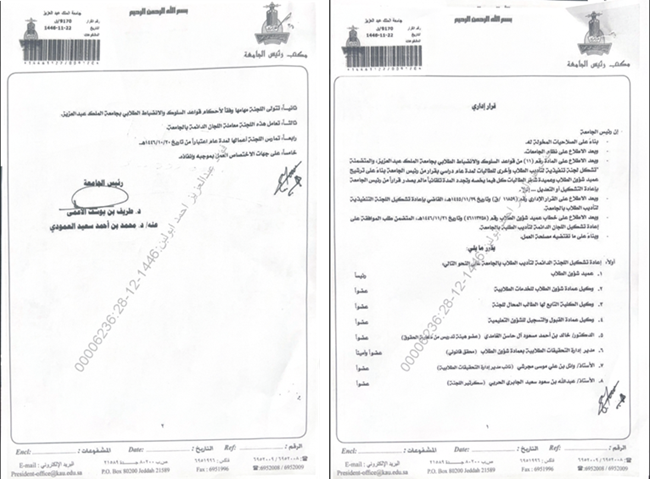
Student Disciplinary Committee:
This committee is responsible for dealing with violations that may be committed by students, such as cheating, academic fraud, inappropriate behavior, or any actions that violate the academic and social conduct rules of the university.Example: The Permanent Committee for the Discipline of Female Students at the university.
Faculty Disciplinary Committee:
According to the regulation governing the affairs of faculty members, Article 82 states that "The Faculty Disciplinary Committee shall be appointed by the university president and shall consist of the following members:
- One of the university’s vice presidents as the chairperson
- One dean who has not conducted the investigation as a member
- A faculty member whose rank is no less than a professor as a member
- A specialist in Sharia law or regulations as a member."
Additionally, Article 91 states, "The university president may issue a warning to a faculty member or anyone in a similar position who fails in their duties. The warning may be either verbal or written, and the university president has the authority to issue two penalties: a warning and a reprimand, after conducting an investigation, hearing their statements, and considering their defense. The decision will be reasoned and final."
Deans must notify the university president of any violations or breaches of duties by faculty members or those in similar positions, based on reports from department heads or their own observations. (Click here to view the regulations governing faculty affairs)
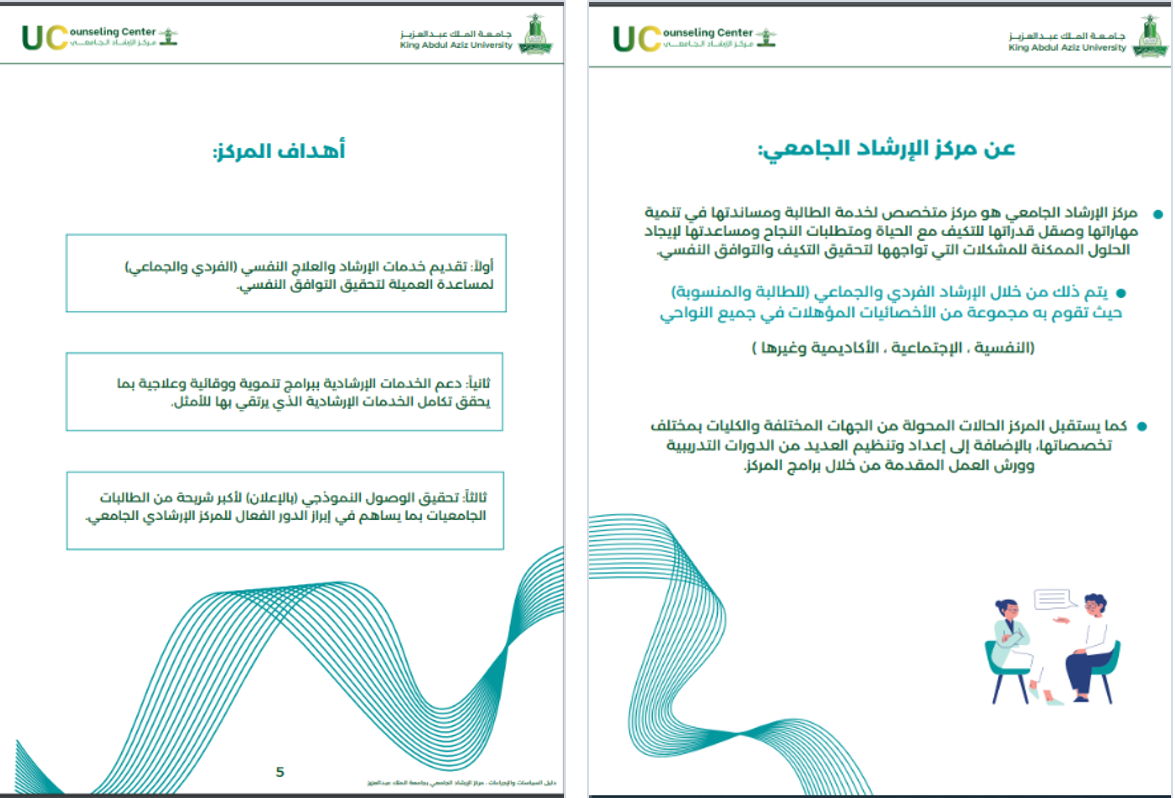
3- Academic Counseling and Psychological Counseling Center
It aims to provide psychological and academic support to students and helps them enhance ethical behaviors within the university environment. It works on raising students' awareness of academic integrity values and addressing pressures that may impact their ethical conduct.
4- The General Administration of Legal Affairs
The General Administration of Legal Affairs was established by a decision from the University Director, No. 2131/502, dated 22/4/1407H. The General Administration of Legal Affairs reports directly to the President of the University and is responsible for providing opinions and consultations to all university departments regarding the proper implementation of regulations, rules, and instructions. It also reviews all contracts and agreements to ensure they are legally sound, investigates violations attributed to faculty members, staff, and students, represents the university in lawsuits filed against it before relevant authorities, studies contracts and agreements made with various faculties, deanships, and centers within the university, and prepares and reviews administrative decisions, among other tasks assigned to it.
Investigation Unit in the General Administration of Legal Affairs:
Conducts administrative investigations with university members regarding alleged administrative and financial violations, and prepares a legal opinion memorandum to be presented to the authority for further guidanc
Takes the necessary steps to refer violations that require severe penalties, such as dismissal from service, to the Bureau of Investigation and Prosecution for their actions."Click here to view"
5- General Administration of Human Resources
The Human Resources Department at King Abdulaziz University plays a pivotal role in promoting ethical compliance by reinforcing the principles of integrity, transparency, and fairness across all administrative practices—from recruitment and training to performance evaluation and grievance management. The department contributes to fostering a safe and equitable work environment that ensures adherence to national regulations and university policies, thereby strengthening institutional trust and establishing a sustainable ethical culture that supports the university’s mission and objectives. (For More)
6- General Administration of Internal Audit Department
The Internal Audit Department at King Abdulaziz University contributes to strengthening ethical compliance and reinforcing the principles of integrity and transparency by conducting independent audit activities aimed at verifying adherence to approved regulations, bylaws, and policies, as well as evaluating the effectiveness of internal controls and risk management processes. The department also supports the implementation of best governance practices by providing developmental recommendations that enhance institutional performance and promote trust and credibility within the university. (For More)
7-Prince Khalid Al-Faisal Institute for Moderation
The Prince Khalid Al-Faisal Institute for Moderation at King Abdulaziz University contributes to supporting the framework of ethical compliance by promoting the values of moderation and balance and fostering a culture of dialogue and intellectual openness within the university environment. Through its research, awareness, and training programs, the Institute enhances awareness of national and institutional values, promotes responsible conduct and adherence to approved regulations and policies, and reinforces the principles of integrity and good governance, thereby contributing to the establishment of an academic environment grounded in respect and responsibility.(For More)
Contributions of the Institute for Awareness in 2025:
|