Climate change is a critical global issue that poses long-term threats to various ecosystems on Earth. Taking concerted international action to mitigate events that could harm the climate and preserve sustainability is imperative. Climate change is a significant concern in Saudi Arabia, and effective measures have been implemented to reduce its causes. The Kingdom has embraced various initiatives and policies related to climate change, as prioritized in Vision 2030, which aims to address both the causes and impacts of climate change.
Kingdom's Vision 2030 & Climate Change
Saudi Arabia is committed to actively contributing to the global fight against climate change. With the introduction of Vision 2030, the country has shown remarkable progress in addressing environmental protection challenges. The Saudi Green Initiative is a remarkable step towards increasing the use of clean energy, reducing carbon emissions, and preserving the environment. This aligns perfectly with the objectives of Vision 2030, which aim to improve the quality of life and secure the future of coming generations.
More inf on Sustainable Saudi Vision
King Abdulaziz University & Climate Change
King Abdulaziz University has been playing an essential role in developing vegetation cover to sustain the environment and reduce the destruction caused by climate change. The "Green Jeddah is Changed" initiative, launched in partnership with relevant authorities, including the Jeddah Governorate, Jeddah Municipality, Jeddah Education Department, and the Association of Neighborhood Centers in Jeddah, is an inspirational effort. This initiative involves planting greenery in schools and public areas such as gardens and streets in Jeddah neighborhoods. Together, we can make a difference in protecting our planet for future generations.
Download KAU Climate Change Policy
Sustainability - Education And Training related to climate Science and Environmental sustainability (kau.edu.sa)
KAU’s Research Centers Relevant to Climate Change
Local and Regional Contribution and Participation
King Abdulaziz University also participates in cooperative climate change disasters with the government both theoretically, locally and regionally, and practically through its faculty and students in local community.
Local
Objectives of the CECCR Center
Prof. Almazroui is also a Member of:
the Board of Directors of the National Meteorological Center (NMC), Kingdom of Saudi Arabia
the Shura Council of the Kingdom of Saudi Arabia
the National Scientific Committee for the Cloud Seeding program over the Kingdom of Saudi Arabia, Saudi Arabia
Regional:
Prof. Mansour of Almazroui is a Member of the Board of Directors of the Center of Excellence for Climate Change, Cairo, Egypt
The Center of Excellence for Climate Change Research at KAU conducts Seasonal Climate Prediction Workshop for the regional government employees
Participation, with the Government, in Local Events
Sample Official Requests from the Government entities for KAU to cooperate and share in different activities.
Partnerships in the context of Climate Change
KAU, represented
by the College of Environmental Sciences, signs a research cooperation agreement to prepare environmental studies with the Saline Water Conversion Corporation.
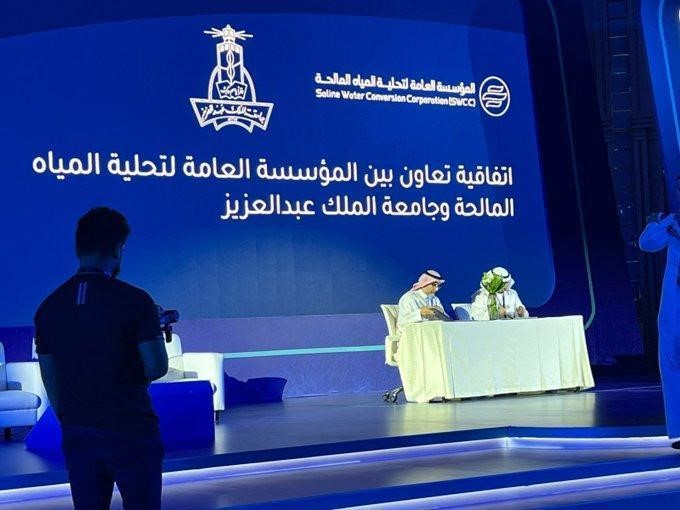
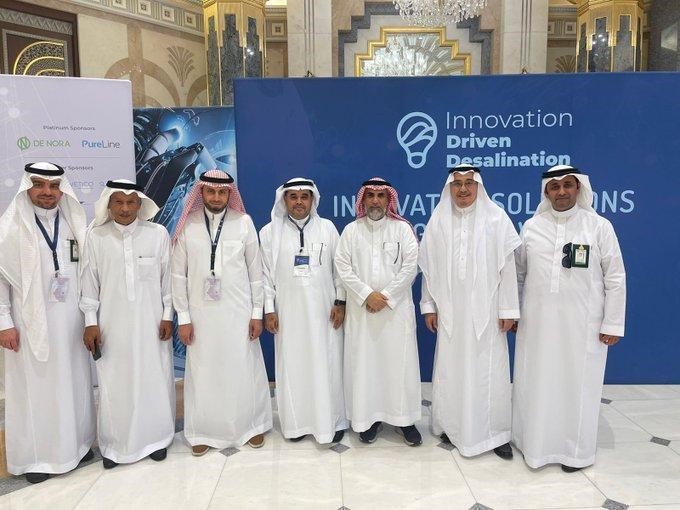
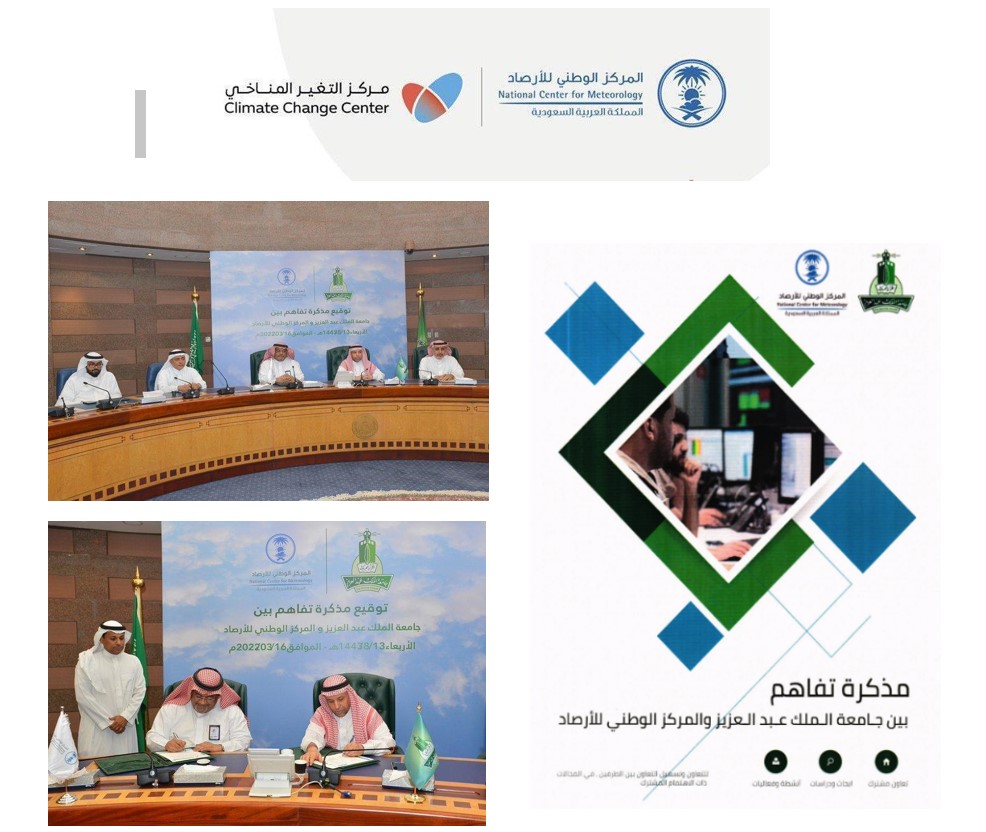
The National Center of Meteorology signed a cooperation agreement with KAU in the fields of monitoring, weather conditions, and the environment.
Climate Action Plan
KAU has a major responsibility regarding Climate Action whether towards its local and national community, the region or globally. hence, KAU has a Climate Action plan, that is shared with local government and/or local community groups, and defined by its related centers, mainly, the Center of Excellence for Climate Change Research (CECCR), and the Center of Excellence in Environmental Studies. This is clearly defined and practiced in the defined objectives of these centers.
In line with the Kingdom’s Vision, KAU is committed to become a Carbon Neutral University which is reflected in its strategy and set targets by 2060.The below spreadsheet contains all details related to the Climate Change Action Plan and this is shared with the governmental entities as well as other stakeholders in the field like NGOs and the private sector.
KAU’s Climate Action Plan(click here)
KAU has a major responsibility regarding Climate Action whether towards its local and national community, the region or globally. hence, KAU has a Climate Action plan, that is shared with local government and/or local community groups, and defined by its related centers, mainly, the Center of Excellence for Climate Change Research (CECCR), and the Center of Excellence in Environmental Studies. This is clearly defined and practiced in the defined objectives of these centers.
The Emergency and Disaster Center
The Emergency and Disaster Center of the Vice President for Projects in the KAU is an Active member in the Jeddah civil defense committee for rain and flood season and as an active member in the Makkah region civil defense Committee during the national peak times of the pilgrimage and the holy month of Ramadan.Plans, policies, and method of communications for the center The Center provides an
emergency plan(2024)
guide
and specifies
policies
and methods of reporting in emergency situations.
emergency plan
guide
The Emergency and Disaster Center(click here)
Net Zero Commitment
KAU is fully committed to taking responsibility for Climate Action locally and globally. To ensure the success of this mission, KAU has signed a contract with The National Energy Efficiency Company "Tarsheed." The contract aims to reduce energy consumption across the entire campus. KAU’s campus land area exceeds 12 million sq. m in both Jeddah and Rabigh Branch including two major hospitals, and several research centers that require a good amount of energy consumption for it to operate. Since the only current source at the university is electricity, KAU signed “Tarsheed” contract which aims to reduce 33 million Kilowatt annually. That would in turn reduce more than 20,000 tons of tco2. Furthermore, KAU follows the United State Environmental Protection Agency EPA formula (www.epa.go) to calculate the total amount of carbon emissions.
Furthermore, Saudi Arabia aims to reach Net Zero by 2060, and in line with the Kingdom’s Vision 2030 targets, KAU is committed to becoming a Carbon Neutral University reach Net-Zero by 2060 that is reflected in its strategy and targets. KAU as part of Saudi Arabia is committed to actively engaged in the global fight against climate change. KAU’s Green Initiative is in line with Kingdom’s Green Initiative towards promoting clean energy, reducing carbon emissions, achieving sustainability goals and preserving the environment.
“Vision 2030 drives collective commitment to creatively and responsibly meet current and future energy and climate challenges. G20 leaders endorsed the Circular Carbon Economy (CCE) framework during the Saudi G20 Presidency. A closed-loop system, CCE is based on reducing, reusing, recycling, and removing carbon that addresses climate change while advancing sustainable development and promoting economic diversification”
https://www.vision2030.gov.sa/v2030/a-sustainable-saudi-vision
King Abdulaziz University and Tarsheed Partnership (Energy and Emissions Efficiency )
King Abdulaziz University (KAU) has taken a significant step toward combating climate change by teaming up with The National Energy Efficiency Company, "Tarsheed." This joint effort aims to reduce energy consumption and enhance energy efficiency across KAU's sprawling campus in Jeddah. The collaboration encompasses a comprehensive rehabilitation plan for 54 buildings and facilities, covering an extensive area of 1.2 million square meters. By implementing cutting-edge energy-saving solutions, KAU and Tarsheed are committed to substantially reducing energy consumption and promoting sustainable practices aligned with the Kingdom's Vision 2030.
Purpose and Scope
The primary objective of the partnership between KAU and Tarsheed is to lead the charge in climate action, both locally and globally. By focusing on energy efficiency, the alliance aims to:
1. Minimize Energy Consumption: The project targets a total annual electricity consumption of approximately 138 million kilowatt-hours. Through rehabilitation works and upgraded systems, a 25% reduction is anticipated, leading to an annual consumption of approximately 105 million kilowatt-hours.
2. Environmental Impact: The projected energy savings from this initiative are equivalent to consuming over 70,000 barrels of oil, mitigating around 20,000 metric tons of harmful carbon emissions. This environmental impact is akin to planting more than 330,000 seedlings, contributing to a greener and more sustainable future.
Tarsheed's Seven Main Standards for Energy Efficiency
To achieve its objectives, "Tarsheed" has outlined seven main standards that will be applied to the buildings and facilities within KAU's campus:
1. Higher-Efficiency Air Conditioning Units: Outdated and energy-intensive air conditioning units will be replaced with high-efficiency and energy-saving alternatives.
2. Improved Air Handling Units: By replacing air handling unit motors and incorporating variable frequency devices, overall system performance will be enhanced, optimizing energy usage.
3. Upgraded Cooling Water Pumps: The project includes the installation of variable frequency devices to improve cooling water pump performance, thereby reducing energy consumption.
4. Enhanced Building Management System (BMS): Control devices will be integrated into cooling and air flow units, linked to an advanced building management system for centralized energy control.
5. Energy-Efficient LED Lighting: Traditional lighting systems will be replaced with energy-saving and high-performance LED lighting in offices, academic spaces, and other facilities.
6. Utilization of Control Sensors: Control sensors will be installed strategically throughout buildings and facilities, ensuring efficient and optimized energy consumption.
7. Commitment to International Standards: The project adheres to recognized international standards for energy efficiency, ensuring the highest level of sustainability and effectiveness.
Carbon Emissions The total greenhouse gas emissions for King Abdulaziz University under Scope 1 and Scope 2 for the reporting year amounted to 483 tonnes of carbon dioxide equivalent (tCO₂e). This figure reflects the university’s commitment to monitoring its carbon footprint and supporting national and global efforts to reduce emissions and promote environmental sustainability.
Conclusion: KAU's collaboration with Tarsheed in its commitment to climate action through energy efficiency rehabilitation sets a commendable example for institutions and communities worldwide. By embracing innovative technologies and sustainable practices, this partnership aspires to create a greener, more eco-friendly future, leaving a lasting positive impact on the environment and society. Together, they work towards a brighter and more sustainable tomorrow, aligned with the goals of Vision 2030 and a climate-resilient planet.
Overview of the Renewable Energy Projects at King Abdulaziz University
The solar energy project at King Abdulaziz University (KAU), in collaboration with TARSHID, aims to enhance sustainability by installing a 15.84 MW solar system on the rooftops of 51 buildings and 4 parking areas within the university. This system operates on-grid, allowing surplus energy to be shared among adjacent buildings within the campus.
Project Objectives and Benefits:
*Generation of clean energy with an annual capacity of 141 GWh.
*Reduction of carbon emissions by 435,530 tons of CO₂ over 20 years.
*Energy savings of 26,136,000 kWh per year.
*Contribution to afforestation, equivalent to 868,777 seedlings annually, as a carbon offset measure.
Scope of Work:
The project encompasses all implementation phases, starting with system design as per WERA, MOMRAH, and SEC standards, obtaining necessary approvals, followed by engineering, procurement, installation, testing, and commissioning, and concluding with operation and maintenance for 20 years to ensure efficiency and sustainability.
Project Significance:
This initiative represents a major step toward the transition to renewable energy, reducing reliance on conventional energy sources. It positions KAU as an eco-friendly institution committed to sustainability and the adoption of best practices in clean energy solutions. To view the kickoff meeting minutes and initiate the project execution, (click here)
King Abdulaziz University Solar Panel Project at the Rabigh campus
King Abdulaziz University Solar Panel Project at the Rabigh campus is a revolutionary endeavor harnessing solar energy to illuminate the university's premises. It stands as a beacon of the institution's dedication to fostering sustainability and diminishing dependence on traditional energy sources. This initiative not only sets a precedent for other educational entities but also underscores King Abdulaziz University's steadfast dedication to environmental stewardship. By spearheading diverse sustainability projects like the solar panel installation, the university plays a pivotal role in safeguarding our planet and securing a sustainable legacy for posterity.
The Solar Shaded Car Park project is commissioned by the King Abdulaziz University under the auspices of the King Salman Chair for Energy Research (KSCER) and the Vice‐presidency for Projects in collaboration with the University of Southampton.
(To Read More Click Here)
|